


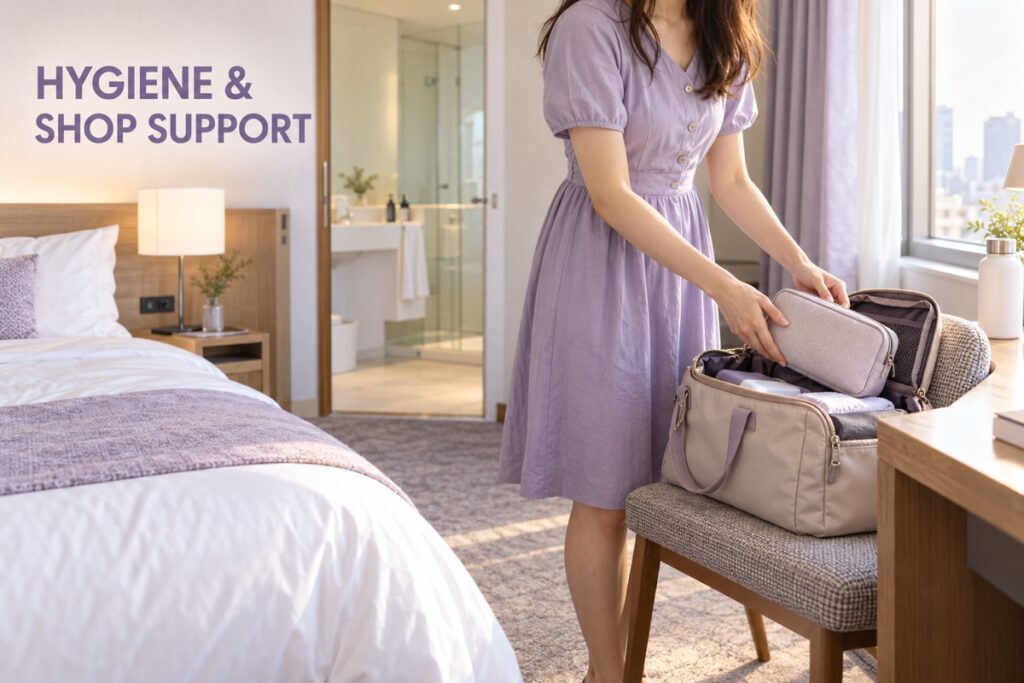
Safety and hygiene in a deriheru visit depend partly on how the shop structures and manages the appointment, not on the service name alone. Published shop rules and worker accounts describe practical measures such as washing before contact, requirements for a suitable room, and procedures for contacting the shop if a visit cannot continue.
Deriheru is a Japanese term for an adult outcall service in which a companion travels to the customer’s location. Understanding what happens around the private appointment—including preparation, brief contact with the shop, and procedures for handling problems—makes it easier to know what to expect.
Why Showering Is Part of the Visit
Showering may be a requirement before the service begins rather than an optional extra. Some shops may also require mouth rinsing, and their terms may allow service to be declined if a customer refuses to follow those hygiene steps.
Even if you have already showered at your hotel, the shop may still require its arrival routine. Personal cleanliness beforehand and following the shop’s required preparation are separate matters, so an earlier shower does not necessarily replace washing at the start of the visit.
These requirements appear in published shop rules, not only in promotional descriptions. Shirogane Platinum, a Gotanda delivery-health shop, lists refusal to shower or rinse among its grounds for declining service. TokyoGirlsHub’s How It Works guide describes a shower at the beginning and another before departure. These examples reflect individual businesses and should not be treated as universal industry rules.
Workers’ accounts provide another perspective. In a 2023 Japanese research report on encouraging HIV testing among people working in the sex industry, one interviewee described handwashing, mouth rinsing, and showering. The interviewee, who had worked at three shops, also said those shops provided hygiene products. This illustrates how some of the preparation may be supplied by the business rather than left entirely to the customer.
For first-time guests, the sequence matters. A visit may begin with a greeting, practical confirmation, and washing before any intimate service takes place. Knowing that routine in advance makes the arrival process easier to understand.
At Club Focus Shibuya, the published service page states that showering together is part of the service and sets conditions regarding access to a bathroom and shower. Its public information describes those requirements at a general level rather than specifying a product-by-product hygiene protocol.
Can I skip the shower if I already washed?
Not where the shop requires washing at the start. An earlier shower does not replace a condition of the appointment.

How to Book an Outcall Service in Shibuya: From First Contact to Hotel Arrival | Club Focus
To book an outcall in Shibuya with Club Focus, contact the booking team through an official channel, send the requested booking details, and wait for staff conf...
What the Hygiene Supplies Are Used For
Products a companion brings may be work supplies rather than hotel toiletries or optional extras. Accounts from people who have worked in delivery health describe shops providing medicated wash and mouth-rinsing products alongside other supplies used during appointments.
One name you may hear is Grince, written グリンス in Japanese. Grince Alpha is a medicated soap whose manufacturer lists uses including skin cleansing, disinfection, and deodorizing. For an English-speaking visitor, “medicated body wash” explains its role more clearly than the unfamiliar brand name alone.
A mouth rinse serves a different purpose from a body wash. Workers’ accounts describe mouth rinsing as a separate step alongside washing. For visitors, understanding the purpose of each product is more useful than memorizing Japanese brand names.
If you prefer to use your own wash, ask the shop in advance whether that can be accommodated within its routine. Bringing your own product does not automatically change the shop’s hygiene requirements.
It is also reasonable to ask what an unfamiliar product is used for. If you cannot use a particular wash or mouth rinse, tell the shop in advance and ask whether an alternative is possible. Any substitute should be agreed before the companion arrives.
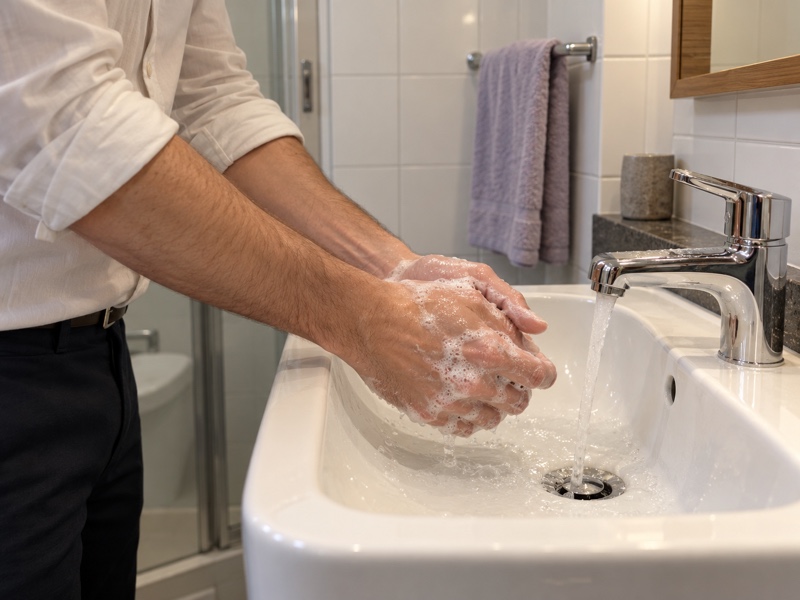
Washing and rinsing are hygiene steps intended to maintain cleanliness and comfort during the visit. They should not be understood as protection against sexually transmitted infections; they are hygiene measures rather than a substitute for STI-prevention practices.
What role does Grince play in the hygiene routine?
Grince Alpha is a medicated wash used for skin cleansing. In the reported shop routines, it is one of several products used as part of the hygiene preparation.
When a visit cannot go ahead
Published delivery-health terms may allow a visit to be declined or stopped if the customer refuses required washing, the room or bathroom is excessively dirty, or a usable shower is unavailable.
These conditions are about the working environment as well as the customer. A private room is not automatically a suitable room. A bathroom that cannot be used, a heavily soiled space, or a refusal to cooperate with the required preparation can prevent the visit from proceeding, even when a booking has already been made.
The practical question is whether washing and the appointment can take place in suitable conditions. A hygiene rule concerns that preparation; it is not a clinical diagnosis.
At Club Focus Shibuya, the published terms include inadequate personal hygiene and an unsuitable location among the grounds for declining or interrupting service. Together, these conditions make both the customer’s cleanliness and the suitability of the room part of the shop’s requirements.
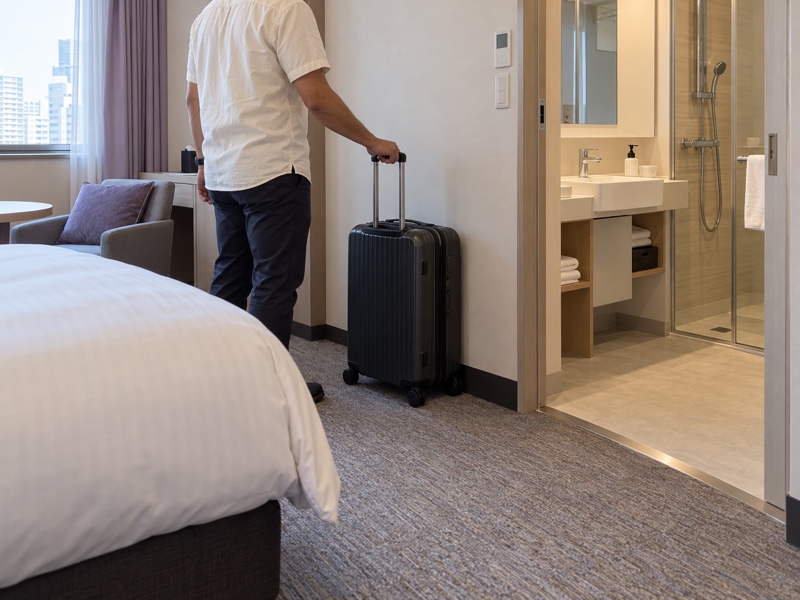
For a hotel guest, preparing the room mainly means making sure the bathroom is usable and that there is enough clear space for the required washing routine. The companion should not have to work around an inaccessible shower, unusable sink, or other avoidable obstacle.
Refusal and interruption are not just theoretical possibilities. A June 2026 discussion on Girls Heaven’s Minque worker-advice forum concerns a guest who resisted washing. Responses suggest declining the service or calling the shop. This is an anonymous discussion, not an official decision, but its practical question is clear: how to proceed when the required preparation cannot be completed.
If a visit is stopped, do not assume that the unused time will automatically be refunded. The shop’s terms determine what happens when a prohibited or unsuitable condition is discovered. Club Focus Shibuya’s published terms state that service may be stopped without reimbursement in the circumstances they describe.
Can a shop refuse a booking because of hygiene?
Yes. Published shop rules include grounds such as refusing the required shower or an unsuitable, unclean room. The applicable conditions are set by the individual shop.
Why the companion contacts the shop
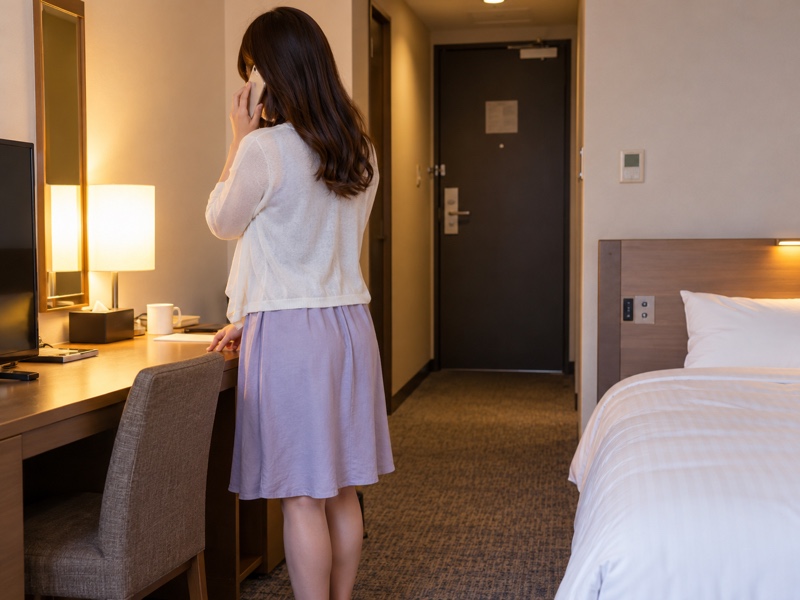
A short call at the beginning or end can be part of the companion’s work. First-person accounts describe reporting the start of the appointment and notifying the shop after leaving the room.
In a January 2026 Note post, a worker describing a trial shift refers to a manual requiring one call when the service timer starts and another after leaving the hotel room. A June 2026 first-shift account by another worker describes being told to call the shop on arrival. These accounts help explain why brief contact with the shop may occur around the appointment even after the companion has reached the hotel.
These reports mark two distinct points: the appointment has started, and the companion has left. A call before the timer starts can therefore have a different purpose from a call at the end. From the guest’s perspective, allowing a short pause for the report is part of understanding the working routine.
Some Japanese workplaces use terms such as in-call and out-call for these work reports. Because those words can mean something different in English-language adult-service listings, “start check-in” and “end check-in” are clearer descriptions here.
Contact also matters when something is wrong. The interviewee in the 2023 research report describes telling a persistent guest that the shop would be called. The June 2026 account also describes reporting an unwanted request. That same account includes a difficult visit in which the worker did not manage to speak up. A reporting procedure does not ensure that every concern reaches the shop or that help arrives within a fixed time.
A shop can also set out what happens after a concern is reported. Its refusal and interruption rules matter here: contacting the business and stopping a visit are related, but they are separate actions. The published terms explain the grounds for stopping; a start or finish report simply records a point in the appointment.
Club Focus Shibuya publishes messaging channels for questions and requests, as well as terms covering prohibited conduct and malicious behavior. Its terms state that police may be notified and legal action may be taken in serious cases. The start-and-finish calls described above, however, come from other workers’ accounts rather than Club Focus Shibuya’s published procedures.
For a guest, contacting the shop is a way to clarify the situation, not to override the companion’s decision. If a visit stops because the room is unsuitable, ask which condition could not be met. If the issue involves a product, identify the product and explain what you need to know.
Is the companion’s call to the shop part of the appointment?
It can be. Workers’ accounts describe start and finish check-ins. The purpose is different from arranging an incall or outcall service in an English-language listing.
What You Can Arrange Before the Visit
The most useful preparation is to have a suitable room, maintain ordinary personal hygiene, and raise any practical concerns in advance. There is no need to memorize Japanese hygiene-product names to communicate those issues.
If you have a concern about a particular soap, mouth rinse, or bathroom setup, raise it before the companion travels. Doing so gives the shop a chance to explain its requirements or discuss alternatives before the visit begins.
Club Focus Shibuya’s official guide invites guests to send requests through its messaging channels and describes English-language support. International visitors can therefore raise practical concerns in plain English before the visit.
Once the visit begins, do not rush through the preparation. Allow time for the washing routine and any work-related check-in with the shop, and say clearly if something is uncomfortable. Understanding these steps in advance helps them feel like part of the process rather than unexplained delays.
A deriheru appointment involves more than the time spent privately in the hotel room. Hygiene requirements, work supplies, communication with the shop, and rules for stopping the visit all form part of the operating structure. Understanding that structure makes it easier to prepare and know what to expect.
About Club Focus Shibuya
Club Focus Shibuya is a Shibuya-based adult outcall service. Its English-language pages describe hotel visits, messaging support, and the conditions under which service may be declined or interrupted.
Information was checked as of October 14, 2026. The general examples in this article come from published shop rules and reported worker experiences and should not be treated as a uniform industry standard. Service conditions may change. This article is not medical advice.