


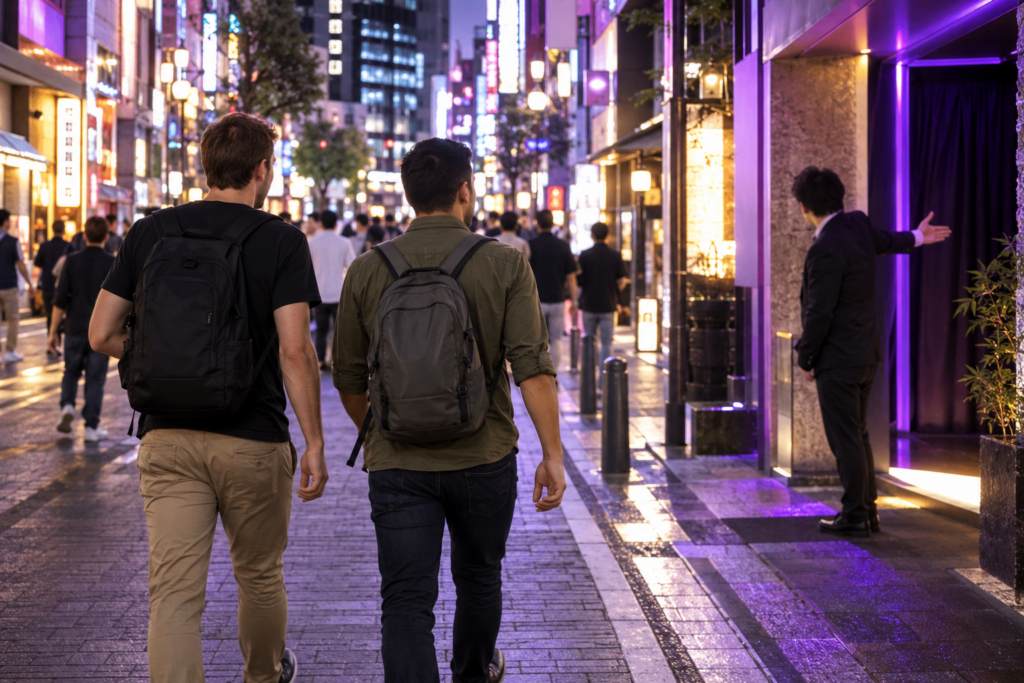
Bottakuri is a Japanese term for a rip-off, especially when a bill is unfairly inflated or includes charges that were not clearly disclosed in advance. In Shibuya, one of the simplest ways to reduce the risk is to avoid letting someone on the street choose the venue for you.
This does not mean Shibuya is unsafe after dark. It means keeping control of one important decision: choose the venue yourself, check the pricing and conditions before you sit down, and walk away from anyone who tries to redirect you somewhere else.
What bottakuri means in Shibuya
Bottakuri is a Japanese term for intentional overcharging or a rip-off. A bottakuri bar is not simply an expensive bar; the problem is that the amount charged does not reasonably match the prices or conditions that were presented and agreed to beforehand.
Tokyo nightlife can involve cover charges, time-based plans, drink charges, drinks purchased for companions or staff, service charges, and late-night surcharges. None of these is automatically a rip-off. The problem arises when important charges are hidden, a low-price promise made on the street is not honored, items you did not order appear on the bill, or pressure replaces a clear explanation of the charges.
That distinction matters because “expensive” and “dishonest” are not the same thing. A clearly displayed cover charge may be higher than you expected, but you can still decide whether to accept it. A vague promise such as “all you can drink, very cheap” gives you little to verify. The important question is whether you can understand what you are agreeing to before the night begins.
The key difference is choice: a clear price lets you decide; an unexplained bill removes that choice after the fact.
Does bottakuri mean every expensive bar in Japan?
No. It means a rip-off or intentional overcharging. A high price that was clearly shown and accepted is different from hidden charges, a broken street promise or a bill that cannot be reasonably explained.
Who approaches people on the street
In Shibuya, a street tout may try to direct you to an izakaya, hostess venue, girls bar, massage business, or adult venue. The approach can seem casual: a greeting, a menu card, a question about what you are looking for, or a promise to find somewhere cheap that is open now.
You may hear the Japanese word kyakuhiki, which refers to street solicitation or touting. Shibuya City prohibits touting and related conduct in public places throughout the ward. Its published enforcement records include incidents around Dogenzaka and Shibuya Station, so this is a local issue in Shibuya as well as in better-known nightlife districts such as Kabukicho.
The important point is that the person approaching you is not acting as a neutral guide. Their goal is to direct you to a particular business, and they may receive compensation for bringing in customers. As a visitor, you usually have no easy way to verify the relationship between the tout and the venue.
Do not try to identify a tout by nationality, age, clothing, or language. None of these characteristics is a reliable indicator. Focus instead on the behavior: if an unknown person approaches you in a public place and tries to lead you to a venue you did not choose, that is enough reason to decline.
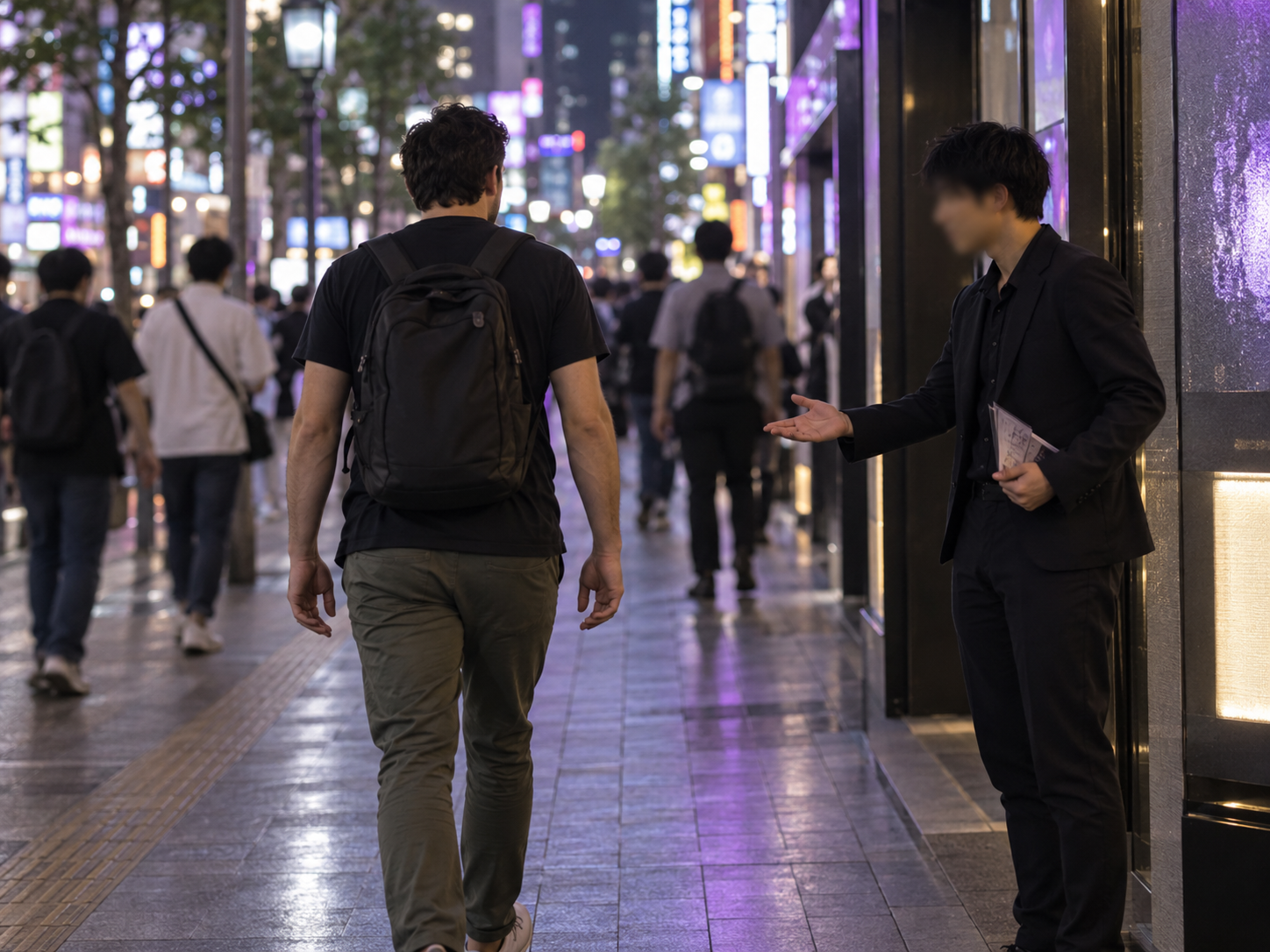
Someone handing out a flyer without asking you to follow them is different from someone who walks alongside you, changes direction with you, or insists on taking you to a particular venue. You do not need to work out the legal category of the behavior while standing in the street; simply keep your destination separate from the invitation.
Are all people promoting bars on the street scammers?
No. You cannot know that from appearance or a short conversation. The safer and simpler rule is not to follow any unknown person to a venue you did not choose yourself.
How a street invitation becomes a rip-off
The risk begins before the bill arrives. When you follow a tout, the venue has already been chosen by the person making the offer, while their relationship with the business remains unclear to you.
- A simple offer. The approach focuses your attention on one attractive point: a low price, no cover charge, a special drink plan, immediate entry, or a type of entertainment you mentioned.
- An unfamiliar destination. The person leads you away from the route you were already taking and into a building or venue you have not researched. The offer made on the street may not appear on the venue’s written menu or price list.
- Unclear conditions. Once you are seated, additional drinks, companion drinks, extensions, service charges, or other fees may be added without a clear explanation of what each charge is for.
- A weaker position to dispute the bill. By the time the bill arrives, alcohol and time may have made the situation harder to manage. Tokyo police have reported cases in which victims became disoriented after drinking, were presented with excessive charges, or later discovered large card transactions.
Not every street approach follows this exact sequence. The broader risk is that following a stranger combines several decisions that are safer to make separately: choosing the venue, checking the terms, and deciding whether to enter.
Dating apps and social media can create a similar pattern. Tokyo police also warn about situations in which someone met online insists on taking a visitor to a particular bar. Even if the meeting feels personal rather than commercial, the same practical questions apply: Did you choose the venue independently, and can you check its terms before ordering?
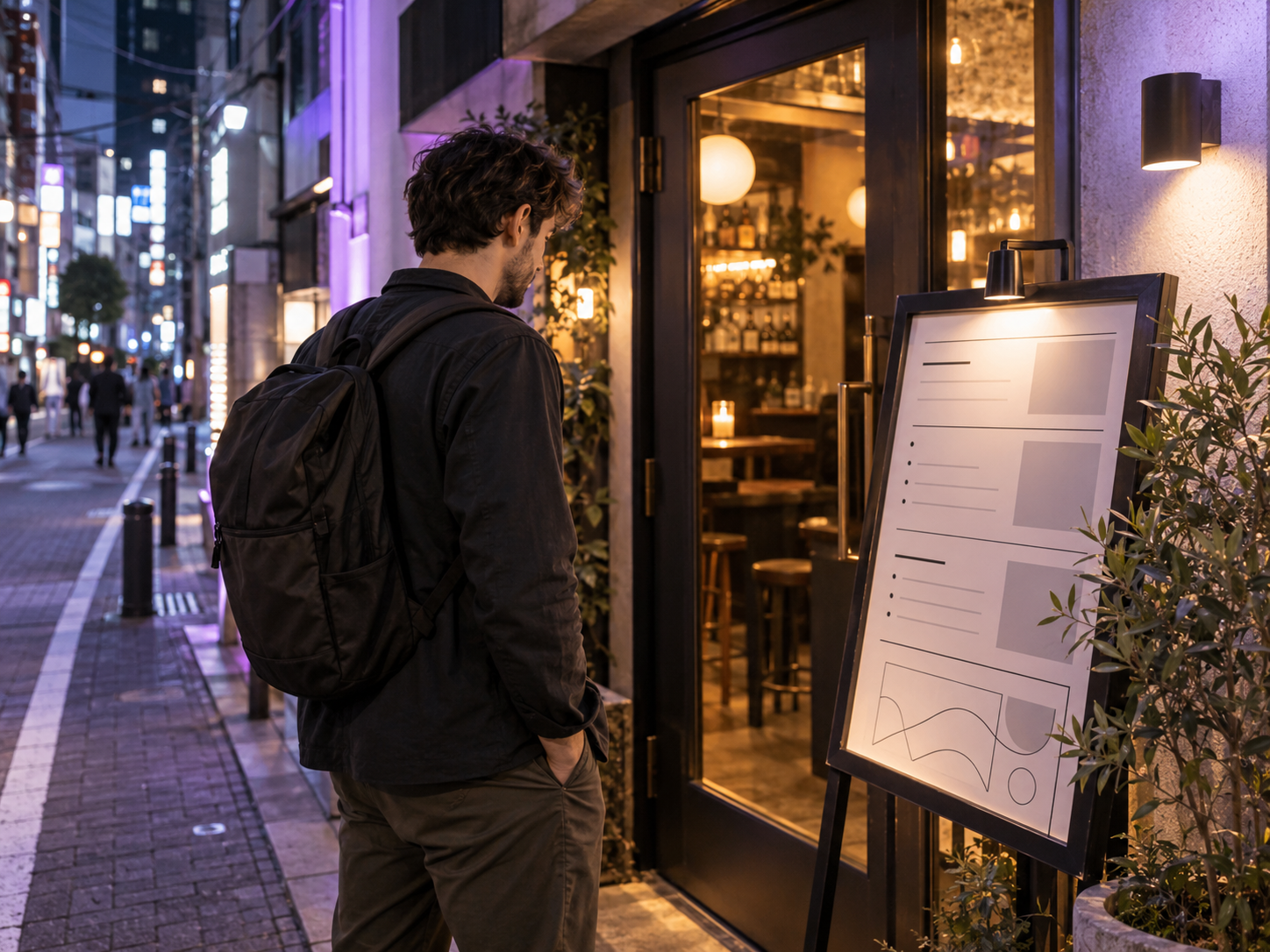
Can a person from a dating app lead you to a bottakuri bar?
It can happen. Tokyo police warnings also cover situations involving people met through dating apps or other online services. If a new contact insists on taking you to one unfamiliar venue, choose a different public place yourself or end the meeting.
A short no, then keep walking
You do not need a clever excuse or a debate. A brief refusal, continued movement and a return to your own route are enough.
In English, “No, thanks—we already have a place” is enough to end the conversation without opening another topic. In Japanese, daijōbu desu—literally “I’m fine”—is commonly used as a polite refusal in this situation. Say it once, keep walking, and turn your attention back to your companion, your map, or the destination you already chose.
Long explanations can invite more questions or counteroffers. If you say you want karaoke but not a bar, the conversation may simply shift to a karaoke offer. If you say the price is too high, a different price may appear. A brief refusal gives the conversation less room to continue.
If the person continues walking beside you, you still do not need to confront them. Move toward a bright, busy place you can clearly identify, such as a station entrance, convenience store, large open storefront, or police box. Do not enter another location suggested as a compromise.
Keep moving
Stopping turns the approach into a negotiation. Continue toward the destination you already selected.
Keep it short
One refusal is enough. You do not owe a reason, a conversation or a look at the venue.
Keep the group together
If you are with friends, make the decision as a group. Do not let one person be led ahead to inspect the place.
Choose the place before it chooses you
Once you remove the street approach from the decision, choosing a place to drink becomes much simpler. Find the venue yourself, check its official website or map listing, and review the prices and conditions before you begin ordering.
You do not need to investigate every detail before entering. The goal is simply to make the charges that could affect your bill clear while you are still free to leave. Nightlife venues may legitimately charge more than a simple per-drink price, so focus on the overall pricing structure rather than one headline figure.
- Entrance or cover charge: Is there a charge simply for taking a seat?
- Time: Is the plan priced by a set period, and what happens when that period ends?
- Drinks: Which drinks are included, and are drinks ordered for another person charged separately?
- Service and tax: Are percentages or late-night charges added to the displayed prices?
- Extensions: Does the plan continue automatically, or will someone ask before more time is added?
- Payment: Which payment methods are accepted, and can you receive an itemised bill?
If the pricing is not clearly displayed, ask before sitting down. A simple question is: “Is there a cover charge, time limit, or service charge?” You are not accusing the venue of anything; you are simply checking whether its pricing structure suits the kind of night you want.
Keep the menu or pricing information available while you are there, and review the bill before paying by cash or card. If the venue charges by time, note when your paid period began. These are practical ways to confirm that the final bill matches the terms you agreed to.
This is also why choosing the venue yourself is different from following a tout. If the pricing or explanation is unclear, you can simply leave and choose somewhere else. Keeping control of the decision is easier before money has been spent or alcohol has affected the situation.
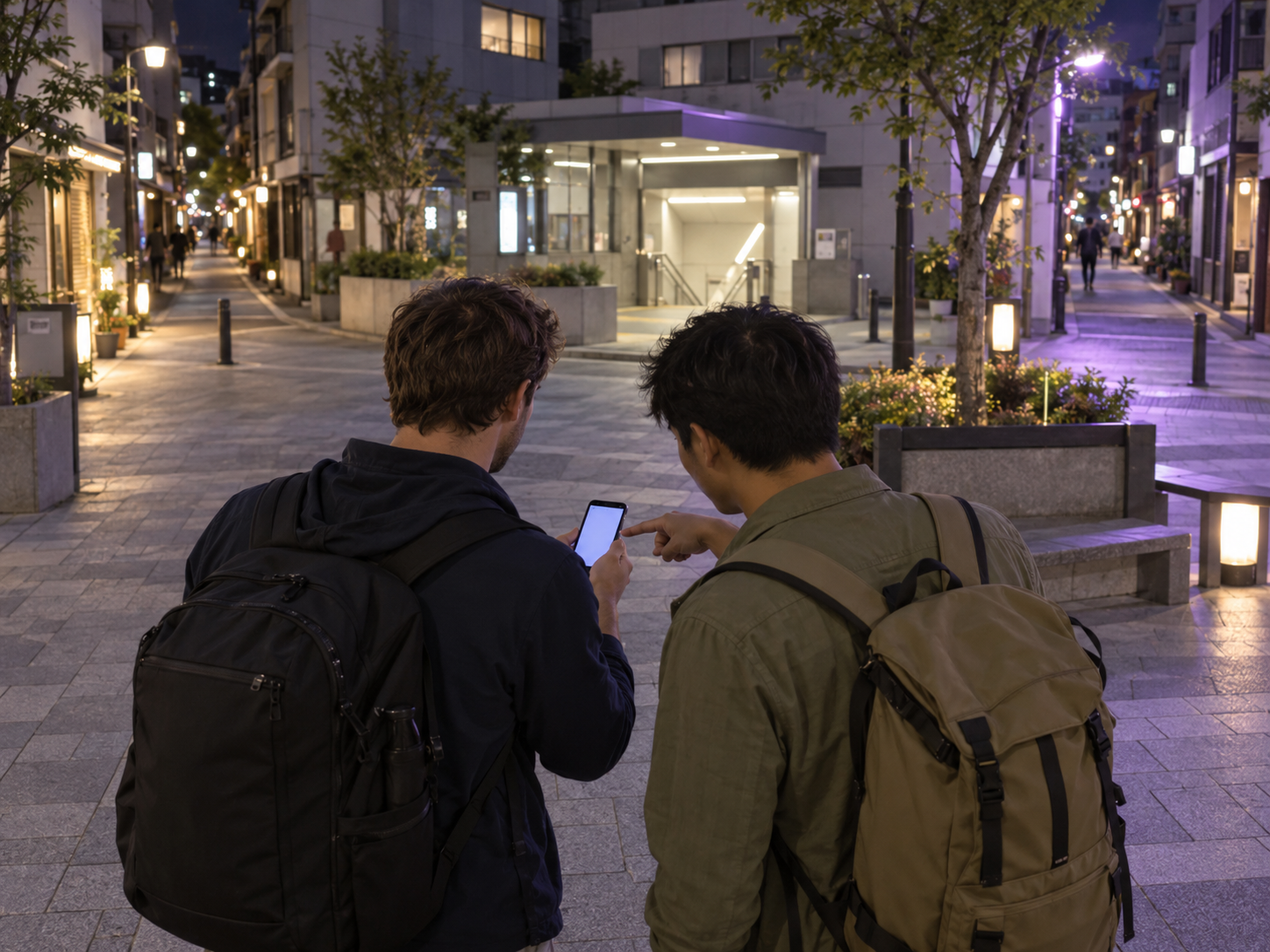
What should I check before entering a nightlife venue in Shibuya?
Check the cover charge, time limit, included drinks, service or late-night surcharges, extension rules, and payment methods. The goal is to understand the structure of the bill, not just the lowest price advertised outside.
Where to get help if a bill becomes a dispute
If the bill is unexpectedly high but the situation remains calm, first ask for an itemized explanation. Compare the charges with the menu or terms you were shown, separate the amounts you understand from those you dispute, and keep copies of the bill, card receipt, and any relevant messages.
Do not respond to pressure by going to an ATM with someone from the venue or by handing over your card and PIN. If you feel threatened, cannot leave, believe a crime is taking place, or have just been victimized, call 110. Tokyo police state that an interpreter can assist with the call if you do not speak Japanese. You can also go to a nearby koban, or police box.
For a non-urgent police consultation in Tokyo, call #9110. The Tokyo Metropolitan Police Department lists Japanese, English, Chinese and Korean support for its General Advisory Center.
For a consumer dispute involving a restaurant or bar, the National Consumer Affairs Center of Japan operates the Visitor Hotline at 03-5449-0906. It provides assistance in English and several other languages on weekdays from 10:00 a.m. to 12:00 p.m. and from 1:00 p.m. to 4:00 p.m. The service can advise you on how to deal with the business, but it cannot legally compel the business to act.
| Situation | Contact | Purpose |
|---|---|---|
| Immediate danger, a crime in progress or you cannot leave | 110 | Emergency police response |
| A non-urgent police matter in Tokyo | #9110 | Police advice and referral |
| A calm dispute about a restaurant or bar charge | 03-5449-0906 | Visitor consumer advice |
Should I call 110 over an unexpectedly high bar bill?
Call 110 if you are in danger, cannot leave, or believe a crime is taking place. For a calm billing dispute, ask for an itemized bill and contact the visitor consumer hotline. For non-urgent police advice in Tokyo, you can call #9110.
Keep the choice in your hands
A night out in Shibuya is not one decision between going out and staying in. It is a series of smaller choices: where to walk, which venue to enter, what terms to accept, and when to leave. A tout tries to combine several of those choices into a single invitation.
Let the invitation pass. Choose the venue yourself and make sure you understand the pricing structure before ordering. That turns bottakuri from a vague nightlife fear into a risk you know how to avoid.
About the publisher
Club Focus Shibuya is a Shibuya-based adult outcall service. It publishes practical information about Tokyo nightlife and the situations visitors may encounter, including the difference between choosing a service directly and being redirected by an unknown person on the street.
Information about local rules and consultation services was verified as of October 2, 2026. Contact details and opening hours may change. This article provides general information and does not constitute legal advice.