



The main difference between a girls bar and a kyabakura is how the conversation is structured: typically across a counter at a girls bar and with a hostess seated beside you at a kyabakura. Both may charge by time as well as for drinks, while a Japanese snack bar follows another model, often combining a cover charge with bottles, mixers, and karaoke.
What you pay for is not simply the alcohol. It is the combination of the social setting, the period you stay and the extras you choose.
What the first charge buys
The initial charge may cover a defined period of hospitality, a drinking package, or access to the venue’s social setting. The word “set” alone does not tell you exactly what is included.
Kyabakura: a period of hosted conversation
A kyabakura is a drinking venue where hostesses typically sit with customers at their tables. Conversation and personal attention are part of the experience, rather than a brief exchange while someone prepares an order. A timed set defines the period covered by the initial charge under the club’s stated terms.
Kyabakura is a shortened form of “cabaret club.” English-language guides may also use “hostess club,” sometimes for the same type of venue and sometimes more broadly for other hosted drinking establishments. Rather than treating the two English terms as separate fixed categories, focus on how the venue actually operates. Here, kyabakura refers to the seated-conversation format, not a stage show or dance club.
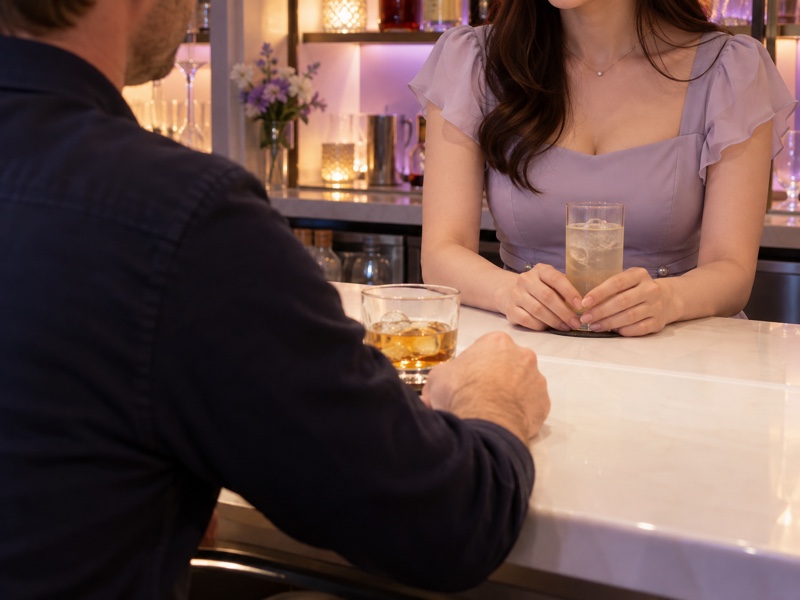
Girls bars: counter conversation, not necessarily a drinks-only bill
A girls bar typically has female staff serving customers from behind a counter. That changes the style of conversation, but it does not mean every visit is billed like an ordinary pay-per-drink bar. Published menus may include timed drinking sets, separately priced drinks for staff, and, in some cases, request fees.
This matters when comparing venues that advertise different starting prices. One price may cover a set period with selected drinks included, while another may be only a cover charge, with drinks charged separately. A lower advertised starting price does not necessarily include the same things.
Snack bars: a place to drink, talk and sing
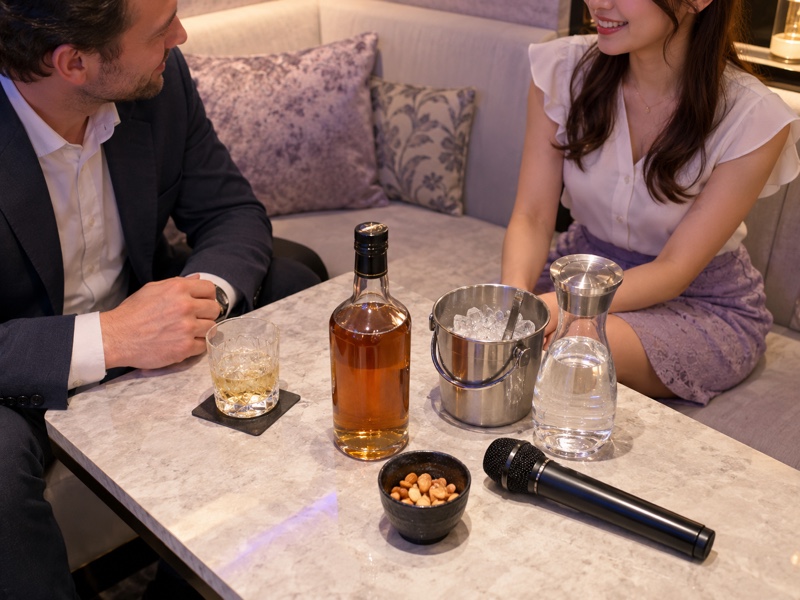
A Japanese snack bar is not a shop that sells snacks. It is a small social drinking venue, often featuring karaoke and hosted by an owner or senior hostess commonly known as the mama. Charges may include a cover or seating fee as well as drinks ordered by the glass or bottle. Some snack bars also offer timed drinking plans, so the term itself does not imply an unlimited stay.
| Format | What the basic charge may cover | Separate items to look for |
|---|---|---|
| Kyabakura | A timed set of hosted conversation, with specified inclusions | Requests, additional drinks, extensions and room choices |
| Girls bar | A timed drinking set or another stated bar arrangement | Cast drinks, requests where offered, and extensions |
| Snack bar | A cover charge or a timed drinking plan | Bottles, mixers and karaoke, where not included |
These descriptions explain the social setting rather than the venue’s legal classification. Guidance from the Tokyo Metropolitan Police and National Police Agency distinguishes regulated entertainment from ordinary drink service based on how the business actually operates. A counter alone does not determine whether the legal concept of settai, or entertaining customers, applies. Terms such as “girls bar” and “snack bar” are everyday business labels, not guarantees of a particular licensing category.
Are hostess clubs and cabaret clubs the same thing?
They can refer to the same kyabakura in English. “Hostess club” can also be used more broadly, so the description of the venue matters more than the translation.
Whose drinks are included?
A drinking package covers only the drinks included in that package, not everything ordered by everyone at the table. Two distinctions matter: which menu the drink comes from and who the drink is for.
A set may include selected house drinks for the customer while excluding other bottles or drinks. An all-you-can-drink menu, often called nomihodai, therefore applies only to the drinks listed as included; it does not mean that every item on the venue’s full menu is covered.
Then there are cast drinks: drinks purchased for a hostess or bartender. Venues may list these separately from the customer’s own drinking set. Agreeing to buy one can therefore add a separate charge even if your own drinks are included in the set. Confirm the price and what the order includes before agreeing.
At a girls bar, do I only pay for my own drinks?
Not necessarily. A time-based set may apply before any separate order, and a drink you agree to buy for a bartender may be an additional item.
A bottle at a snack bar is only part of the bill
Buying a bottle does not necessarily replace the seating charge. At a snack bar, the bottle and the use of the venue can be priced separately.
“Bottle keep” means purchasing a bottle and having the unfinished portion stored for a future visit. This can be convenient for returning customers, but it does not make the evening all-inclusive. The venue may still charge a cover, seating, or service fee for each visit, and items such as water, ice, or other mixers may be priced separately.
For a first visit, compare the plans available rather than focusing on one headline price. A bottle-based plan and a timed drinking package may appear on the same menu: the first combines a bottle purchase with any applicable charges, while the second includes specified drinks for a set period. Which is more suitable depends on how you plan to spend your time at the venue.
Karaoke follows the same principle. It may be included in a plan or charged separately, sometimes by the song. The presence of a microphone tells you that karaoke is available, not how it is billed. Likewise, a “no time limit” condition attached to one plan should not be assumed to apply to another plan at the same venue.
Are snack bars always untimed?
No. Published snack-bar menus include both untimed cover-charge arrangements and timed plans with extension charges.
Time and requests change the calculation
A bill can grow without another drink being ordered. Staying beyond a set, or choosing an additional service, can change what is due.
When a set becomes an extension
An extension is an additional chargeable period after the original set ends. Some venues use automatic extensions, meaning that staying beyond the initial period can start the next billing period without a separate request. The extension may also be a different length from the original set, so “another set” is not always an accurate description.
For a planned short visit, it is important to know when the paid period ends and how the venue handles extensions. Does a staff member check with you before the set ends, or do you need to request the bill yourself? Knowing the procedure is more reliable than assuming that the chargeable time has stopped.
Requesting a particular person
A shimei, or hostess-request fee, may apply when you request a particular hostess. Kyabakura menus may distinguish between requesting someone from the start and choosing someone after meeting the hostesses inside. The venue’s own terminology and conditions determine which fee applies, so the charges should not be added together automatically.
The billing unit matters here as well. A request fee charged per set or time period is not necessarily a one-time fee for the entire evening. If you extend your stay, check whether the fee applies again. The charge covers the stated request arrangement for that period; it does not imply exclusive access to the hostess beyond the venue’s terms.
Some girls bars also list a “request” fee. That does not mean the arrangement is identical to a kyabakura shimei. Instead of assuming what the fee includes, check the venue’s own menu or ask how the request system works.
Reading the bill beyond the headline price
The final total depends on what you order and whether tax and service charges are already included in the listed prices. A menu that shows these charges separately needs to be read differently from one that quotes an all-inclusive total.
Some venues also use different price bands depending on your arrival time. A rate advertised for an earlier time may not apply later in the evening, even for the same length of stay. When asking for a quote, provide your intended arrival time so the venue can identify the correct starting rate.
A private room may add another charge to the bill. A per-person set fee and a private-room charge cover different things, so groups should confirm which charges apply to each guest and which apply to the room itself. Choosing a seating area can therefore affect the total price.
A service charge is imposed by the venue and is separate from consumption tax. If a menu combines them under a single “tax and service” line, ask how the amount is calculated. The important details are the percentage or rate used and which part of the bill it applies to.
Consider three versions of the same visit. In the first, the customer stays only for the initial set and orders nothing beyond the included drinks. In the second, the customer also buys a cast drink. In the third, the customer stays beyond the original period. The second adds a separate order, while the third adds more chargeable time and any fees that recur with an extension. Tax and service charges then depend on the venue’s stated pricing terms.
This is why a higher final bill is not necessarily evidence of an unexplained charge. Additional agreed orders, extensions, and other stated fees may account for the difference. At the same time, a charge that is already included in the quoted total should not be added again when estimating the bill.
Will the basic set price be my total if I order nothing extra?
Only if the quoted price includes all applicable charges and you stay within the stated time conditions. Separate tax, service charges, or extension fees may still increase the final amount.
Getting a useful total before you sit down
A useful estimate should describe a specific visit rather than just a starting price. The number of guests, expected length of stay, and planned orders give the venue enough information to provide a more meaningful quote.
One question can bring those conditions together: “For one person, for the first set, with only the included drinks and no extras, what is the total including tax and service charges?” This establishes a baseline. Any bottle, request fee, separate drink, or extension can then be explained as an addition to that amount.
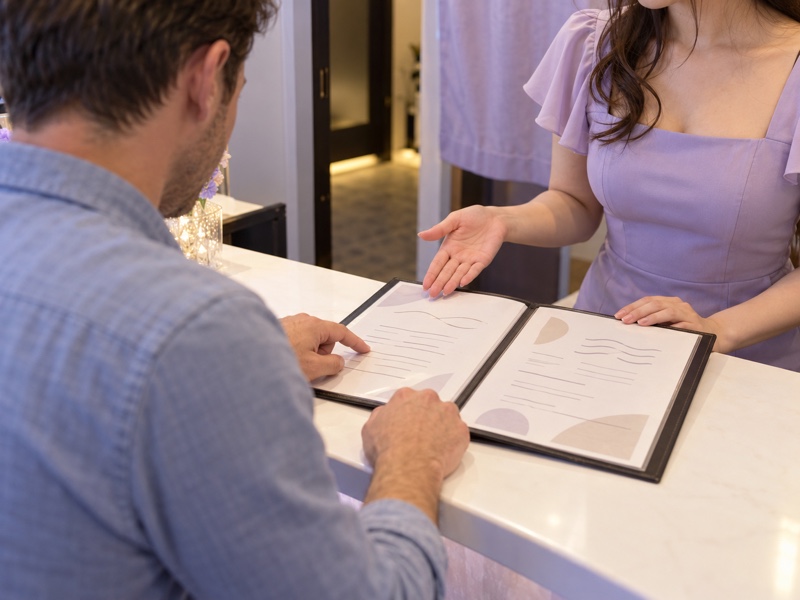
If you are comparing a snack bar’s bottle plan with a timed plan, the same question needs one adjustment: which items come with each arrangement? That puts the bottle, cover, mixers and karaoke on the same basis instead of comparing two unrelated headline figures.
- Which drinks and services belong to the initial charge?
- Which optional items would be separate, and how often are they charged?
- When does the first period end, and how is an extension started?
- Does the quoted total already include tax and service charges?
The goal is not to predict every order you might make. It is to understand what the initial charge covers and then recognize which choices will increase or otherwise change the final bill.
About the publisher
Club Focus Shibuya is a Shibuya-based adult outcall service in the delivery-health category. Its service model differs from the venue-based drinking and conversation formats described in this article.
This article provides general information about terminology and common billing structures. It does not provide current price quotes or legal advice. Menus, service conditions, and applicable rules vary by venue, so confirm the current terms directly with the establishment.